From Star Charts to Public Observatories: How Skywatching Became a Shared Visit
Star charts and public observatories offer different ways into skywatching: build your own map of the night or learn how shared observation took shape.
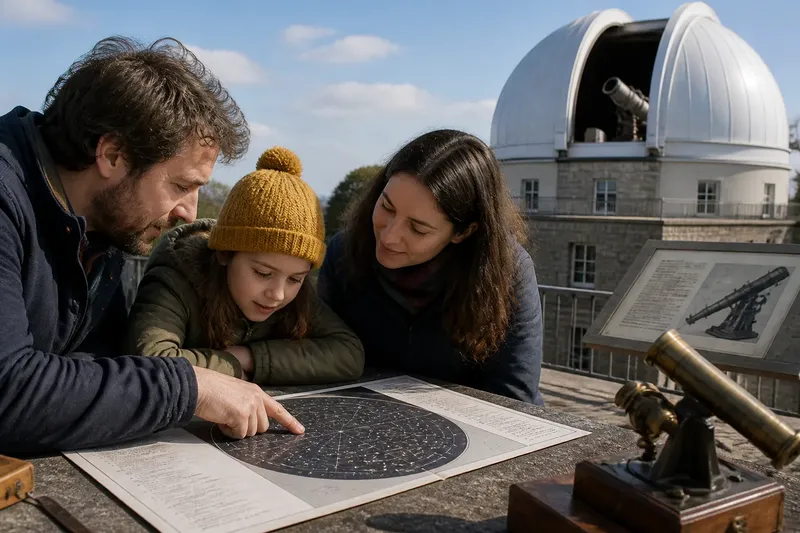
A folded star chart asks you to do more than look up: it asks you to match marks on paper to the sky above you. Star charts and public observatories offer different routes into that work, one centred on personal orientation and the other on a place where instruments and knowledge are shared.
That distinction is useful for anyone interested in the history of public skywatching. A chart helps explain how people could learn the sky independently; an observatory visit can show how organised access developed around equipment, instruction and a shared setting.
Learning from charts
Printed star charts and almanacs have long helped readers connect visible patterns with names and positions. They do not remove the need to observe: you still have to orient the page, find a clear view and decide which points of light correspond to its markings.
That small act of comparison can make a familiar patch of sky feel like a place you can return to. A planisphere, a printed seasonal chart or a sky-mapping app can help, but the essential method is the same: look, compare, and adjust your idea of where you are facing.
Observatories and access
Public observatories have offered visitors ways to encounter astronomical instruments without owning or operating them. The details differ across places and periods, so it is more accurate to describe this as one route by which some people gained access to equipment and instruction, rather than a wholesale change in how everyone experienced the sky.
A visitor might meet a telescope through a scheduled session, a demonstration or a conversation with someone responsible for the instrument. The chart remains useful in this setting, too: it can connect the object being discussed with the broader sky, rather than turning the telescope into the whole story.
Public access also depends on local choices: what a venue opens, whom it welcomes, and how it explains what visitors are seeing. Looking at those choices is part of space heritage. The building and instrument matter, but so does the history of who was invited to use them and what kind of participation was encouraged.
Ways to take part
Choose a format according to what you want to learn, not just the name of the venue. A chart-led outing develops orientation; a historic instrument can reveal how observation was organised; a society gathering may centre on sharing knowledge and equipment.
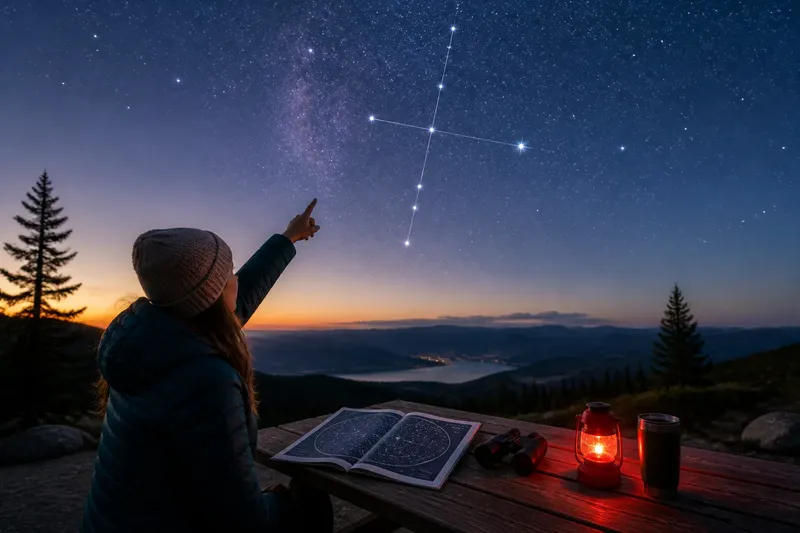
- Chart-led practice: Observe a familiar pattern on a printed chart or planisphere. If you can match its orientation to the sky, use it to locate another nearby pattern; if not, rotate the chart or begin with a simpler, recognisable group of stars.
- Instrument history: At a heritage observatory, look for explanations of how the telescope was used and who had access. If the display connects the instrument to its working context, follow that account; if it focuses only on the object, ask whether staff or interpretation materials explain its role.
- Shared learning: At an astronomy society event, notice whether participants exchange practical knowledge as well as listen to a presentation. If there is space for questions or informal discussion, use it to clarify a term; if the format is formal, keep a note to follow up afterwards.
- Independent observing: Use a permitted public place and a chart, with no instrument required. If the location is open and suitable for quiet observation, stay and compare the chart with the sky; if access is unclear or your presence could disturb others, choose another site.
- Group participation: Look for opportunities for visitors with different experience to take part. If a session offers both explanation and time to observe, it may suit a mixed group; if it assumes specialist knowledge throughout, choose a more introductory event.
- Heritage interpretation: Check whether a site discusses its community and historical context alongside its equipment. If it explains how people used the place, explore that account; if not, ask what records or local stories can help fill the gap.
Say you are visiting an unfamiliar town with a friend who knows the constellations and a child who has never used a telescope. Your starting point is a printed seasonal chart, a planned visit to a historic observatory and a question about how visitors learned to use its instruments. First, use the chart to identify a pattern you can recognise together; next, read the observatory’s interpretation and ask how the instrument served its original purpose; finally, compare that history with the way the site welcomes visitors now. The result is a visit in which the child can follow the sky on paper, the experienced friend can discuss the instrument, and you can consider how access has changed without assuming that every visitor had the same opportunity.
Reading a shared sky
A chart and a public instrument teach different kinds of attention. The chart encourages you to orient yourself and notice relationships across a broad area; a telescope directs attention to a particular object, while its mount, eyepiece and setting reveal the practical work behind observation.
Neither route makes the other obsolete. Someone who learns a few patterns by eye may better understand where an instrument is pointed, while a visit to a historic observatory can give new meaning to the charts and observing notes used outside its walls.
Shared observation also has a social history worth treating carefully. A group setting can make knowledge and equipment available to visitors, but access has never been identical everywhere; local rules, opening arrangements and the way a venue presents its past shape who can take part.
Planning a heritage visit
Before travelling, check the venue’s current information for opening arrangements, interpretation and any opportunity to see historic instruments. The aim here is not to compare event formats, but to arrive with a question about the site’s history and the tools people used to understand the sky.
- Check whether the site explains how its instruments were used; if it does, note a detail to look for on arrival, and if it does not, ask staff where that history is presented.
- Check whether a chart or observing material is provided; if it is, use it to follow the site’s explanation, and if it is not, bring a simple printed chart or planisphere.
- Check the venue’s access information for paths, stairs and seating; if the arrangements suit your party, plan your visit around them, and if they do not, contact the venue about alternatives before travelling.
- Check whether photography or handling objects is restricted; if the rules permit your intended activity, follow them, and if not, use labels or notes to remember what you saw.
- Check whether the site discusses its community history; if it does, read that account alongside the technical interpretation, and if it does not, ask whether local records or oral histories are available.
- Check that any independent observing location is open to visitors; if access is clear and respectful, use it for chart practice, and if permission is uncertain, choose a place where public access is explicit.
Questions about sky heritage?
How did people use star charts?
Readers compared printed positions and patterns with the sky, using the chart to orient themselves and identify objects. Charts supported independent learning, though interpreting one still required a visible sky and practice.
What makes an observatory a heritage site?
A site may preserve instruments, buildings or records connected with the history of astronomical observation. Its heritage also includes how people worked there and how the public was, or was not, invited to encounter that work.
Can a chart help during an observatory visit?
Yes. It can show where an object sits in relation to the wider sky, giving context to an instrument or explanation. Bring a printed chart or planisphere if you would like to make that comparison yourself.
What should I look for at a historic observatory?
Notice the instrument’s setting as well as the instrument itself: how it was mounted, where an observer stood and what the site says about its purpose. If interpretation leaves those details unclear, ask how the equipment was used and who could access it.
Keep the sky connected
Star charts and public observatories belong to a shared history of making the sky intelligible, but they tell different parts of it. One shows how an observer can build familiarity; the other can preserve evidence of the people, tools and institutions that shaped organised observation.
When you visit a heritage observatory, take one question with you about who used its instruments and how visitors encountered them. That question can turn a glance at old equipment into a more grounded understanding of how access to the sky was arranged.