Planetarium Dome or Observatory Visit: Two Different Ways to Meet the Sky
Planetarium dome or observatory visit: compare a guided, immersive sky with a real telescope setting and choose the outing that suits your plans.
A planetarium dome or observatory visit gives you two distinct ways to spend an evening with the sky: one builds a vivid, guided view overhead; the other takes you to a working or historic site where telescopes meet the actual sky. The better choice depends less on which sounds more impressive than on what you want to notice, learn and remember.
Imagine you are planning an outing with your niece, who has become curious about Saturn after seeing it in a book. You have one free evening, a cloudy forecast, and a choice between a planetarium programme and a public session at a nearby observatory. Treating that decision as a small case study helps reveal what each place can offer—and what it cannot promise.
Two kinds of encounter
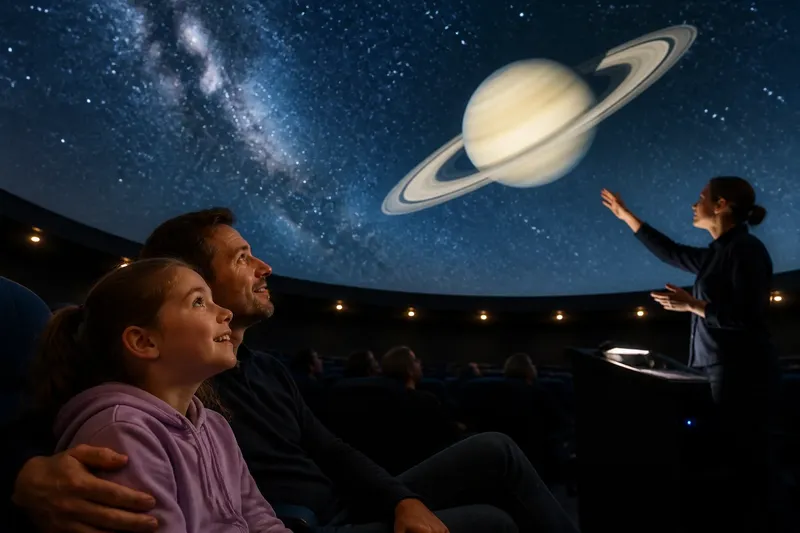
A planetarium is a room designed to make the sky the centre of attention. A projection system places stars, planets and other celestial scenes across a dome, while a presenter or recorded programme guides the audience through them. The experience can travel across the sky or through space without depending on the weather outside.
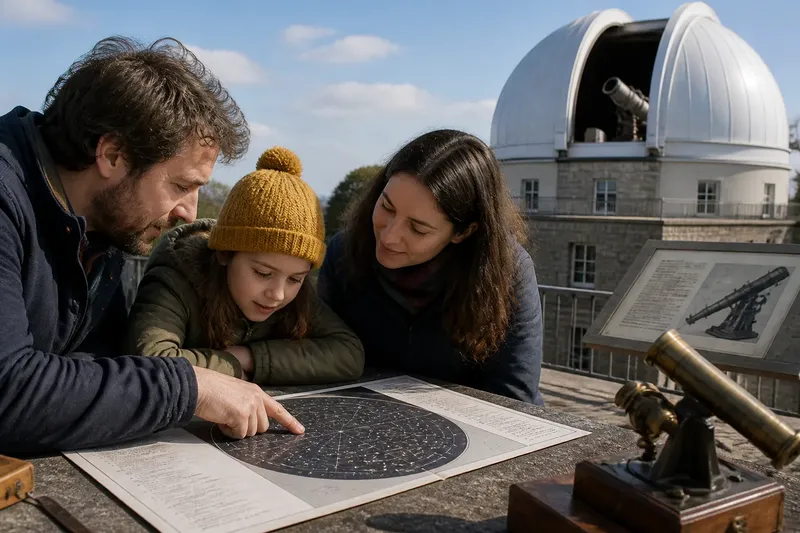
An observatory is tied to a particular place and its instruments. Depending on the site, visitors may see a telescope, learn how observers use it, look through an eyepiece, or join a talk beneath the open sky. Some observatories are historic buildings or public visitor centres; others remain active research facilities with limited access. The word alone does not tell you what a visit includes.
That distinction matters for the imagined Saturn outing. The planetarium can show Saturn from a clear, carefully chosen viewpoint and explain what the rings look like. The observatory may bring your niece close to the instrument and, if conditions and the programme allow, let her see the planet through a telescope. These are different encounters, not two versions of the same one.
The cloudy-evening decision
In this invented situation, the cloud cover makes the public telescope session uncertain. You check the observatory’s visitor page and see that its programme includes a talk and a telescope viewing only if the sky is suitable. The planetarium lists a live presentation about the planets, so you choose the dome for this particular evening rather than gambling on a clear view.
Inside, the presenter can direct everyone’s attention to Saturn’s rings, explain how the planet appears to move against the background stars, and pause for questions. The dome’s scale helps a younger visitor feel surrounded by the scene, while the presenter can adjust the route to the group’s interests. Your niece leaves with a clearer mental picture, even though she has not seen Saturn through a real telescope.
The observable result is not a substitute for the sky; it is a more reliable introduction to it. She can describe what the rings look like and has a fresh question about how a telescope gathers light. The outing has succeeded on its own terms, while the observatory remains a sensible option for another evening when direct viewing is the priority.
What the dome does well
Choose a planetarium when you want a structured explanation, a broad view or a programme that can make difficult scales easier to grasp. A presenter can move from the visible sky to a close-up of a planet, then connect the two without asking visitors to interpret a dim eyepiece view on their own.
The format also suits mixed groups. Someone who is new to astronomy can follow a guided story, while a more experienced visitor can listen for details about planetary motion, seasonal skies or the equipment used to create the projection. Check whether the session is live, recorded or a mixture: a live presenter may respond to questions, while a recorded show may offer a more tightly composed visual journey.
There are limits. A projected view is constructed to teach or entertain; it is not a direct observation of the sky from the building. If your main goal is to learn how an observatory works or to look through a telescope, a dome programme may leave that curiosity unanswered. Read the programme description for its subject and format instead of assuming every show is a general tour of the stars.
What an observatory adds
An observatory visit gives the setting an important role. The building, telescope mount, control room or observing platform can show how people turn a question about the sky into a careful act of looking. Even when visitors cannot use the main instrument, seeing its scale and learning how it is aimed can make observation feel tangible.
Direct viewing, when offered, has a particular character: you are looking at light from an object in the sky rather than at a projection of it. The view through an eyepiece may be small, subdued or fleeting, and the experience can depend on atmospheric conditions, queues and the instrument being used. A guide can help visitors know where to look and what features may be visible, but the view will not resemble a polished image on a screen.
Before booking, check what “observatory visit” means at that site. It might describe a tour, a public lecture, a viewing session or access to a visitor centre, and some facilities do not offer public entry to their research areas. Follow the venue’s own visitor information for access arrangements, age suitability and any restrictions on photography or equipment.
Choosing between them?
Which is better when clouds are forecast?
A planetarium is usually the more dependable choice for seeing a carefully presented sky, because its programme does not rely on clear conditions outside. An observatory may still offer a talk or indoor tour under cloud, so check whether its event has a useful non-viewing element.
Will I see a planet through a telescope?
Only if the observatory offers public viewing and the object is available under the conditions that evening. Read the event details and, if the wording is unclear, ask the venue what visitors should expect rather than treating telescope access as automatic.
Which visit suits a first-time visitor?
A planetarium can be easier for someone who wants a guided explanation before learning the night sky outdoors. An observatory can suit a curious beginner too, especially when a presenter explains the instrument and helps visitors interpret what they see.
Can I attend both on one trip?
Yes, if their programmes and opening times fit, and the two experiences can complement each other. A dome show can provide context for a later observatory session, where the real instrument and sky make that context concrete.
Make the choice personal
Return to the invented outing: your niece wanted to understand Saturn, not necessarily to operate a telescope. With cloud forecast and a planetarium programme focused on the planets, the dome gave her a clear, guided first encounter; the question she brought home suggested a reason to try the observatory later. If she had instead been fascinated by the telescope itself, the observatory’s indoor talk could have been the better choice even with viewing uncertain.
For your own planetarium dome or observatory visit, name the part of the experience you most want: an explanation, an instrument, a direct view or simply an engaging evening together. Then match that wish to the actual programme, not the venue label. A dome can make the sky intelligible; an observatory can connect looking to a real place and a real instrument. Knowing which of those encounters you are seeking makes the booking decision far easier.